
The Decarbonizing the Built Environment Through Heritage Toolkit
The Decarbonizing the Built Environment through Heritage Toolkit aims to support policymakers, practitioners, communities, and heritage advocates in accelerating the rapid uptake of heritage-informed decarbonization strategies through policy. It includes:
An overview of the key policies, stakeholders, and approaches that contribute to heritage-informed decarbonization
Key principles founded in heritage to drive built environment decarbonization, with context about why they matter in today’s landscape and how to adapt them to a local community context
Global examples of heritage-informed decarbonization in action, from buildings and design practices to tools and policies
High-impact levers to integrate heritage principles into building sector climate policies and include climate change mitigation into heritage policies
What’s in the Toolkit
Introduction to Heritage-Informed Decarbonization

An introduction to heritage-informed decarbonization, what it means, and why it matters.
A roadmap to help navigate the toolkit.
An overview of the language, people, and frameworks that participate in advancing heritage-informed decarbonization solutions, including a glossary, a policy taxonomy, and a stakeholder guide.
Principles and Policies

Five lessons demonstrated by heritage solutions that advance environmental and cultural benefits hand-in-hand (based on the 5 Recommendations of the Campaign).
Prioritized policy levers and illustrations of successful policy examples to advance each principle in varying contexts.
Community engagement prompts to scale global concepts down to the local level.
Global Case Studies

15 detailed case studies from around the world to illustrate examples of successful buildings, programs, and policies.
Evaluation of cultural and political contexts that lead to success.
Illustration of co-benefits that result from each case.
Takeaways about how key lessons and concepts of each case apply to different scales, communities, and climates
Curated Atlas of HID

Repository of nearly 150 examples of heritage-informed decarbonization from around the world.
An index of tools, guidelines, materials, buildings, places, policies, and programs showcasing heritage-informed decarbonization.
Sort by region, type of case, or approach to heritage-informed decarbonization to find practical and relevant examples for any context.
Sample Cases of HID
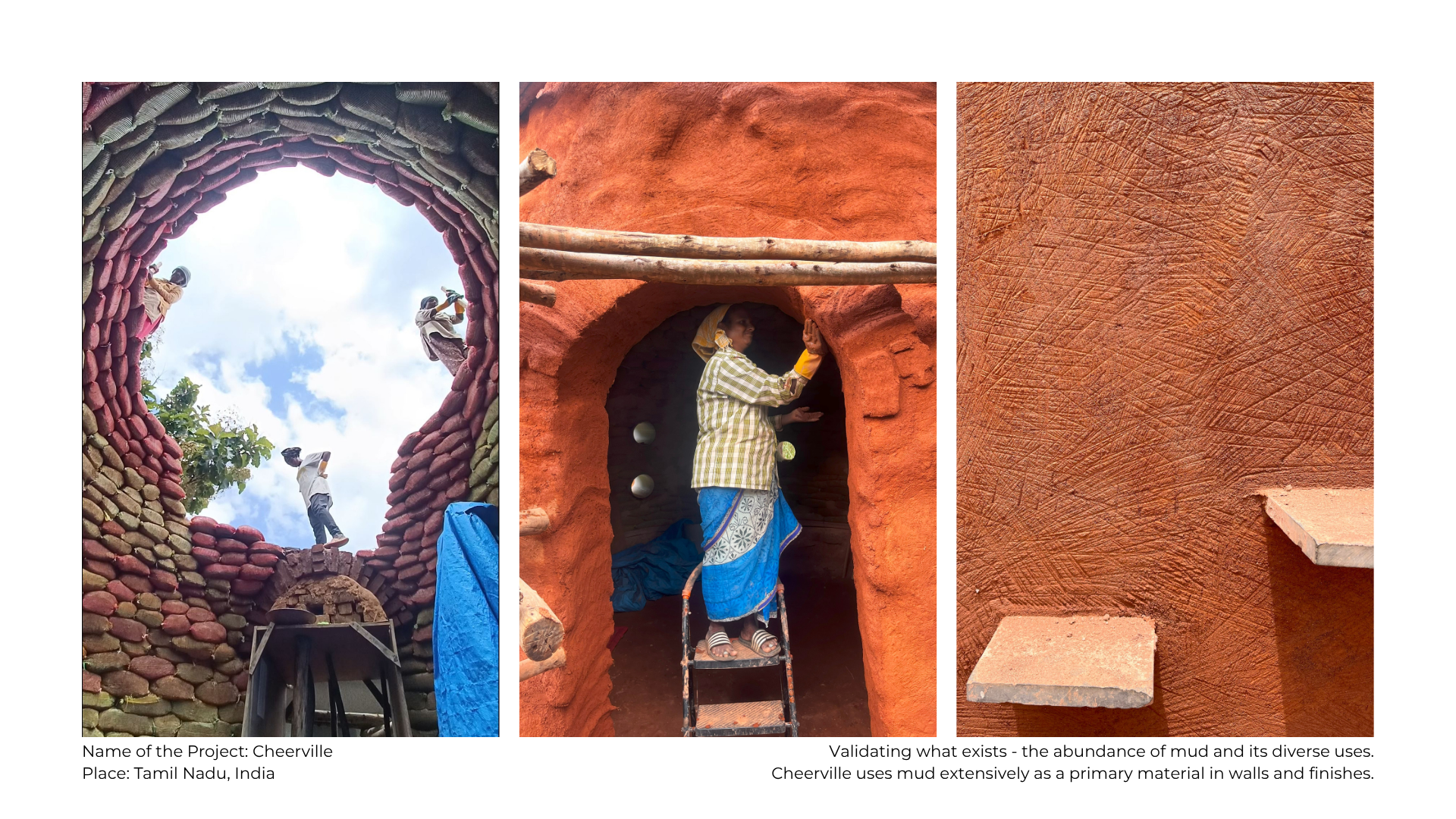
Credit: Masons Ink
Case Study: Masons Ink
Location: Bengaluru, India
Overview: The architecture and design firm Masons Ink has facilitated grassroots initiatives to empower women in the construction industry through the development of specialized knowledge and skills in sustainable building practices. They have provided training for women in construction with low-carbon heritage materials, including earth and bamboo, and brought together all-women mason teams to realize their architectural projects alongside the client, site architect, and a community researcher. Combating biases of both women in construction and earth-based materials, Masons Ink has synergized environmentally sustainable construction with social empowerment and gender parity.
Co-Benefits: workforce development; empowering women; public health; circular economy
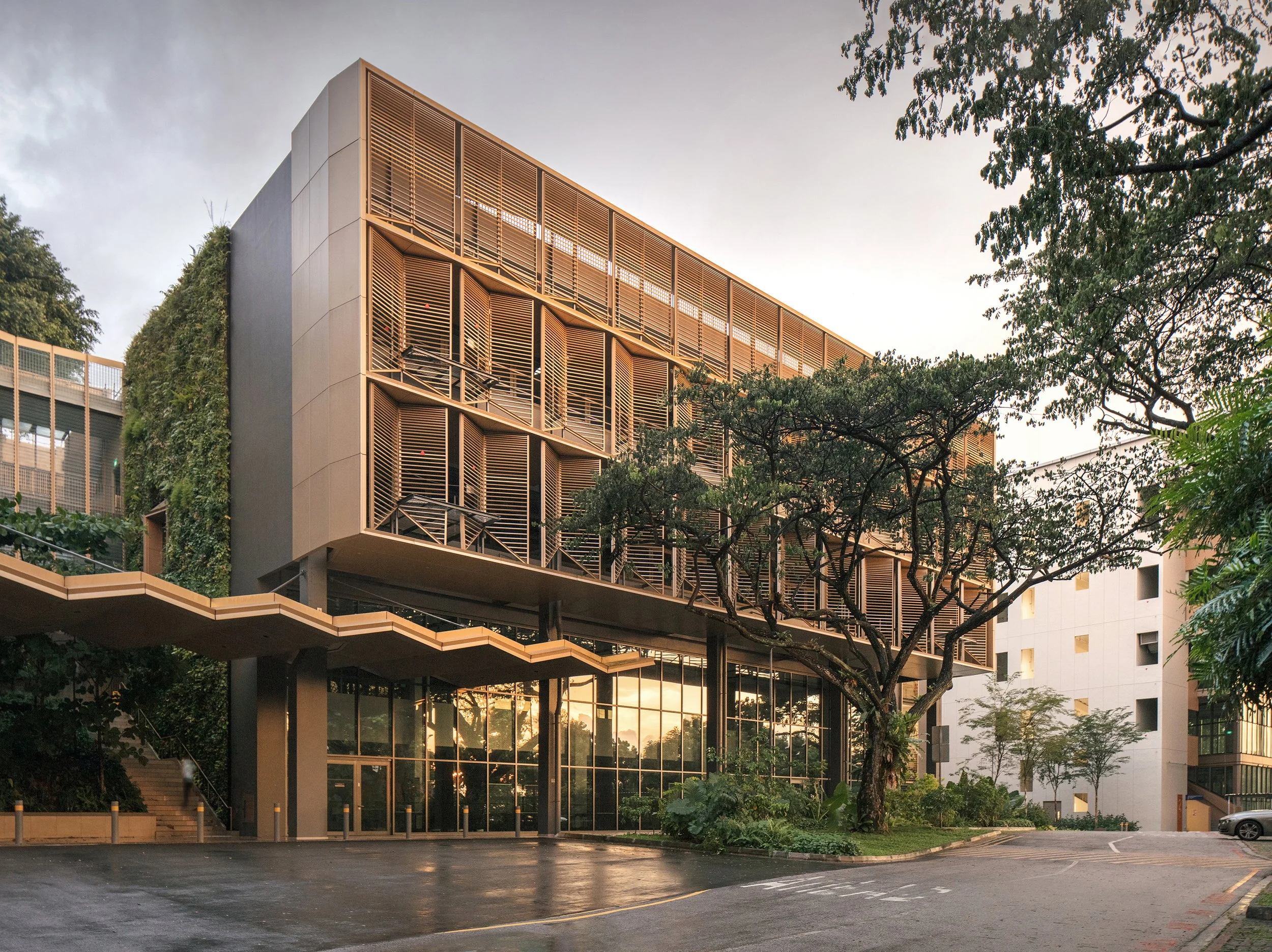
Credit: Finbarr Fallon
Case Study: National University of Singapore School of Design and Environment
Location: Singapore
Overview: The National University of Singapore renovated its 1970s College of Design and Environment Buildings 1 and 3 in a net-zero energy adaptive reuse project, cutting embodied carbon to an estimated two-thirds of comparable new construction through targeted interventions and integration of passive design elements. The resulting buildings support a broader shift toward decarbonization in the built environment profession as a “living lab” for emerging design professionals and the broader public.
Co-Benefits: education; natural landscape; resilience
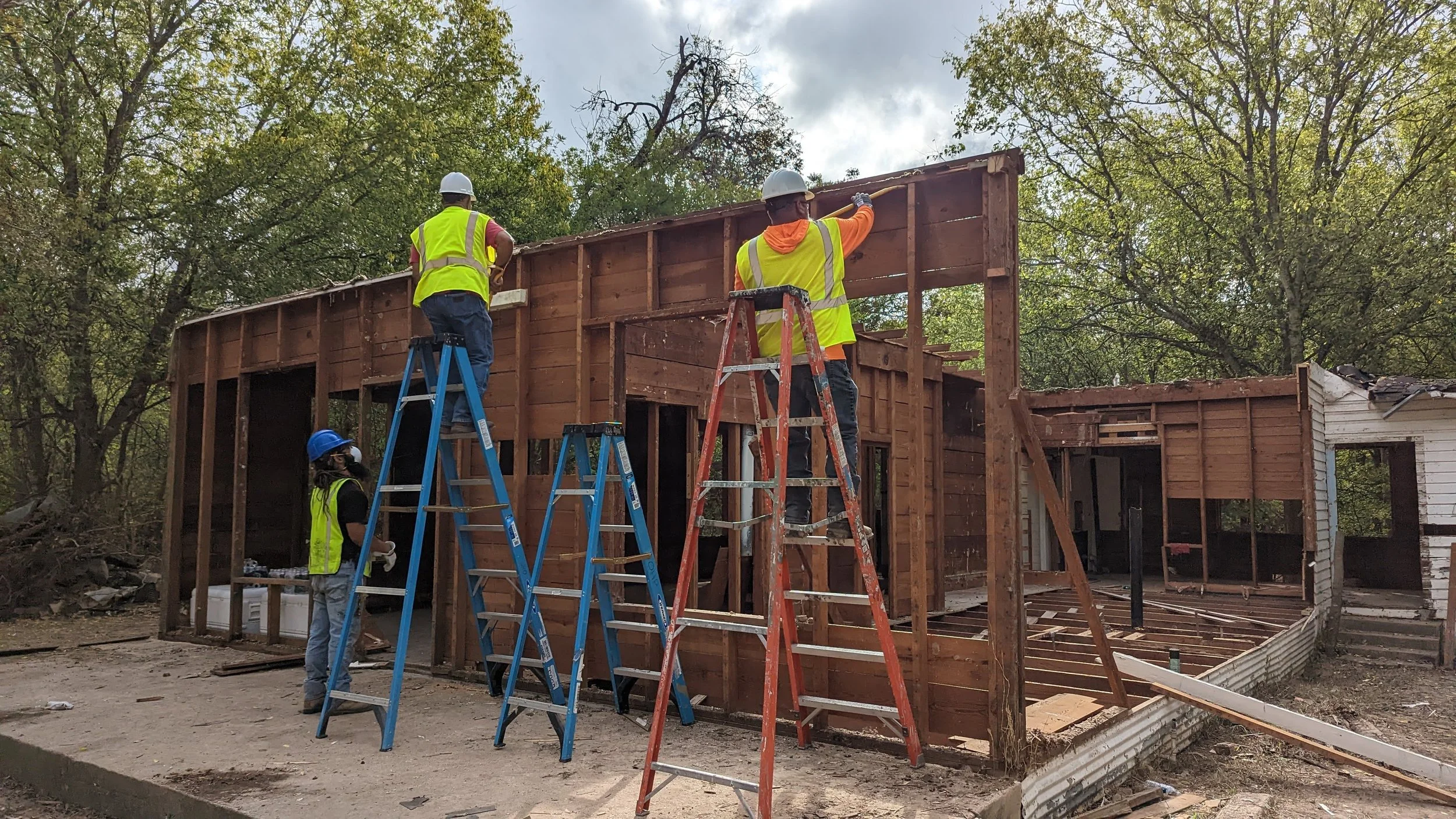
Credit: City of San Antonio Department of Historic Preservation
Case Study: San Antonio Deconstruction and Salvage Initiative
Location: San Antonio, Texas, United States
Overview: The City of San Antonio’s pioneering deconstruction and salvage policy demonstrates a city-level approach to develop regulatory mechanisms and accompanying training and economic initiatives to jumpstart a circular economy. With this multi-pronged approach, the policy preserves pieces of built cultural heritage while reducing the quantity of materials sent to landfills. It also reduces demand for new construction materials and associated embodied carbon investment and generates a new marketplace.
Co-Benefits: affordable housing; workforce development; public health; circular economy infrastructure
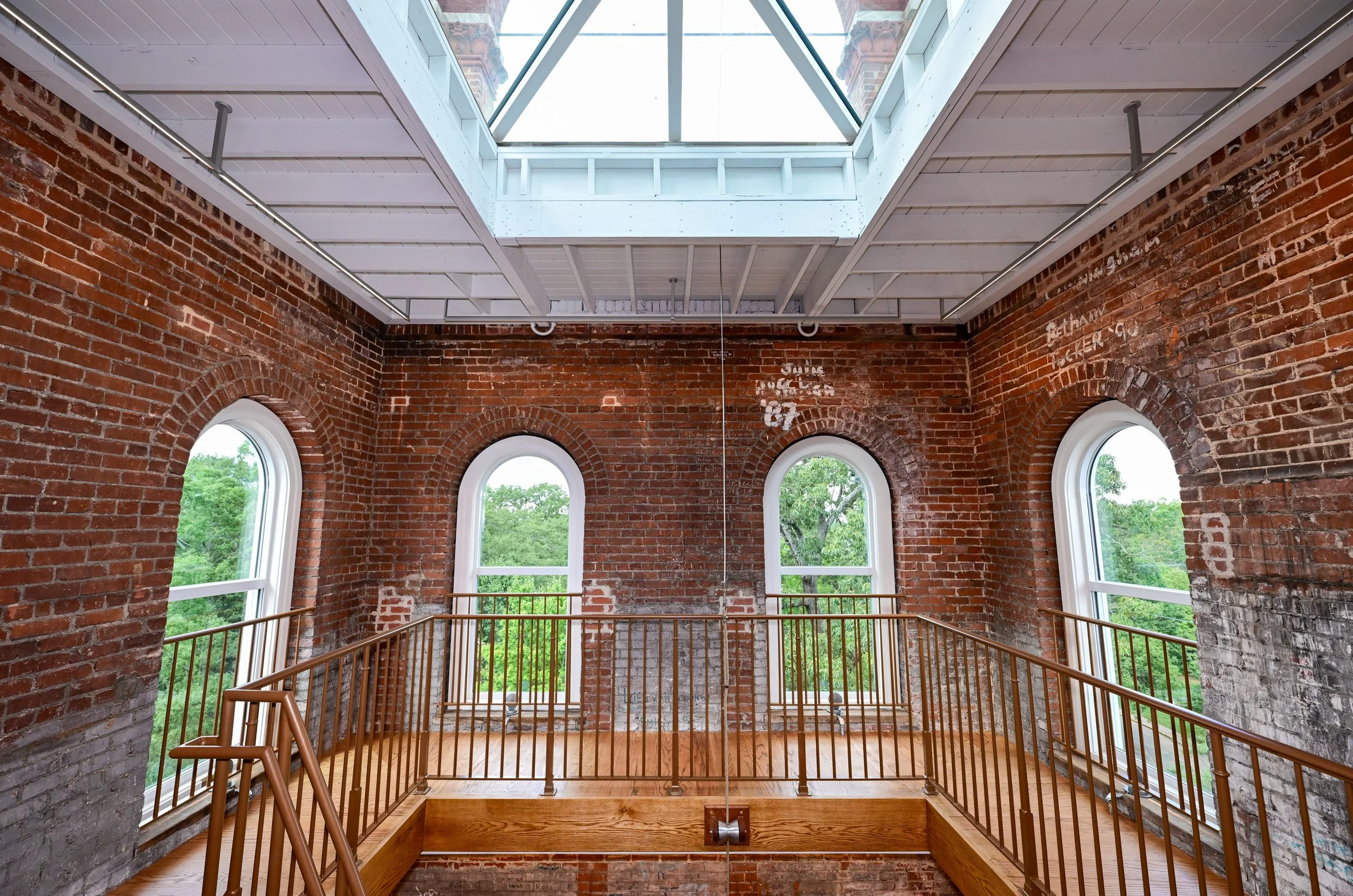
Credit: Adam Hagy
Case Study: Scaling Up Climate Action through Building Stewardship at Agnes Scott College
Location: Decatur, Georgia, United States
Overview: Agnes Scott College is a private liberal arts college for women located within metro-Atlanta, Georgia, committed to achieving carbon neutrality by 2037. The College has prioritized reuse and renovation of its existing campus buildings over new construction, while undertaking energy efficiency upgrades as well as quantifying and reporting the benefits of these measures. The ongoing campus sustainability efforts at Agnes Scott College illustrate the value of steadily instilling and fostering a community’s culture of stewardship around buildings and places.
Co-Benefits: equity & inclusion; education; empowering women; natural landscape; resilience
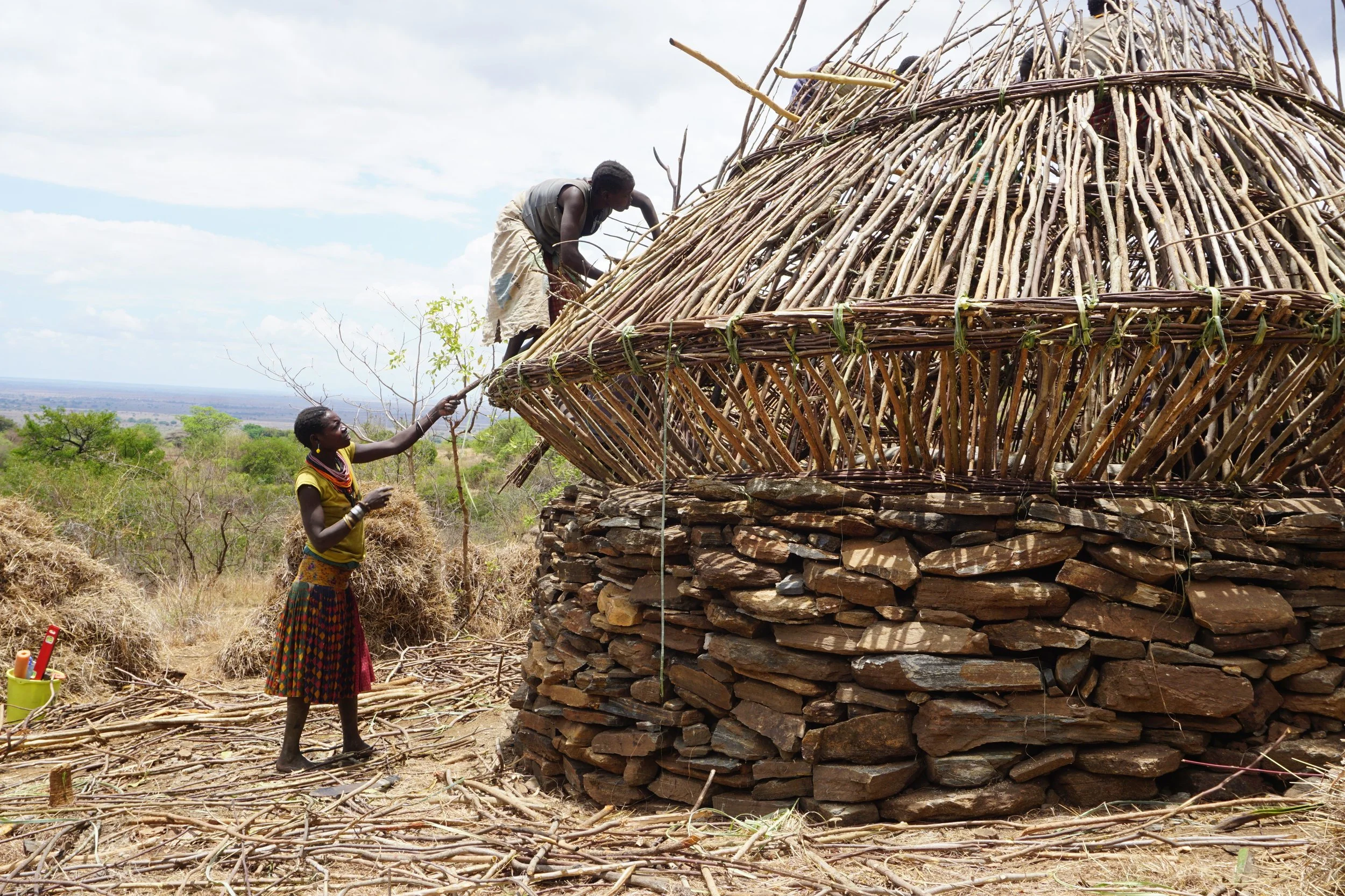
Credit: Ethan Walker, Made with Matriarchs
Case Study: Manyatta Homesteads
Location: Uganda, Africa
Overview: Manyatta homesteads are traditional, fortified compounds in northeastern Uganda. Constructed from local, bio‑based materials (earth, wood, cow dung, and grass), and guided by traditional religion, the homestead shelters families and ancestral spirits, with spatial organization shaped by sacred relationships to livestock and landscape. Preserving the tradition of manyatta traditions sustains cultural identity while reinforcing agro‑pastoral practices and contemporary ecological stewardship, linking heritage building knowledge with land management that supports long‑term resilience.
Co-Benefits: sustainable agriculture; resilience; traditional knowledge; circular economy
Preview the Atlas
Explore the Atlas of Heritage-Informed Decarbonization to connect with relevant resources, projects, programs, and policies from around the globe.